Our Custom-Built Labs

Explore our research facilities, equipment and current highlights

Our Research Facilities

Where ideas become experiments and experiments become breakthroughs.

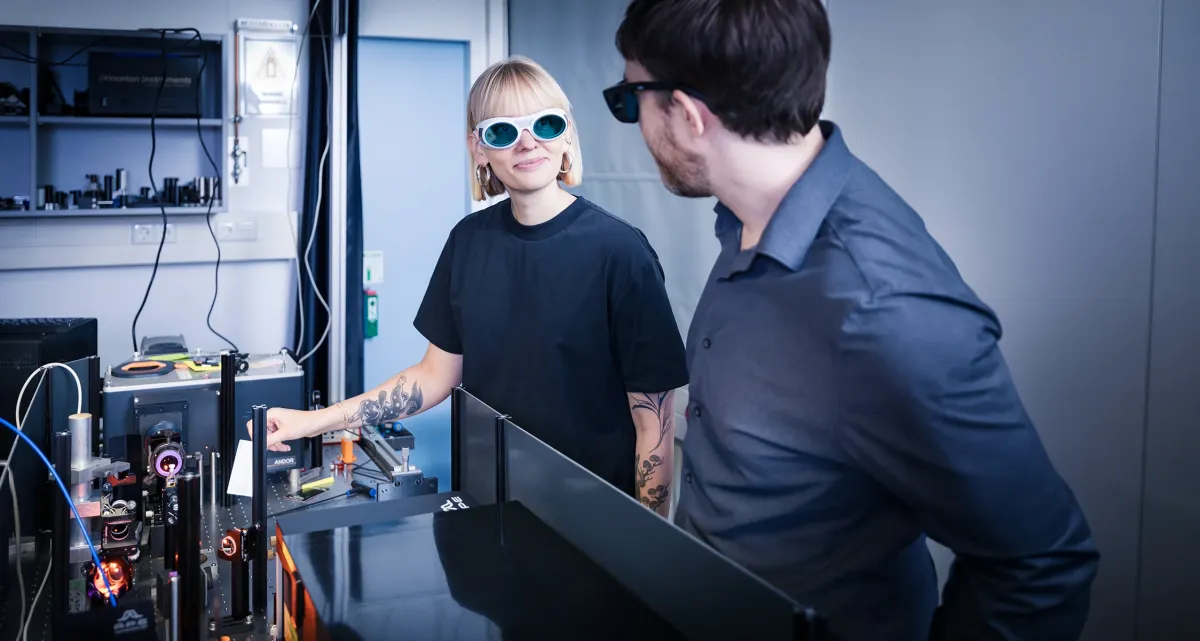
Femtosecond Spectroscopy Lab

Setups developed with the latest generation Yb-based femtosecond lasers with unprecedented pointing and energy stability, combined with non-collinear optical parametric amplifiers (NOPA), offer to measure dynamics in sub-20 femtosecond regime.

Femtosecond Spectroscopy Lab

Key equipment

  • NOPA by Prof. E. Riedle
  • Light Conversion Pharos lasers
  • Mode-locked InnoLas picolo MOPA laser
  • Vis and mid-IR Transient Absorption
  • TDCF
Full lab page Back to overview

Time-Resolved Spectroscopy Lab

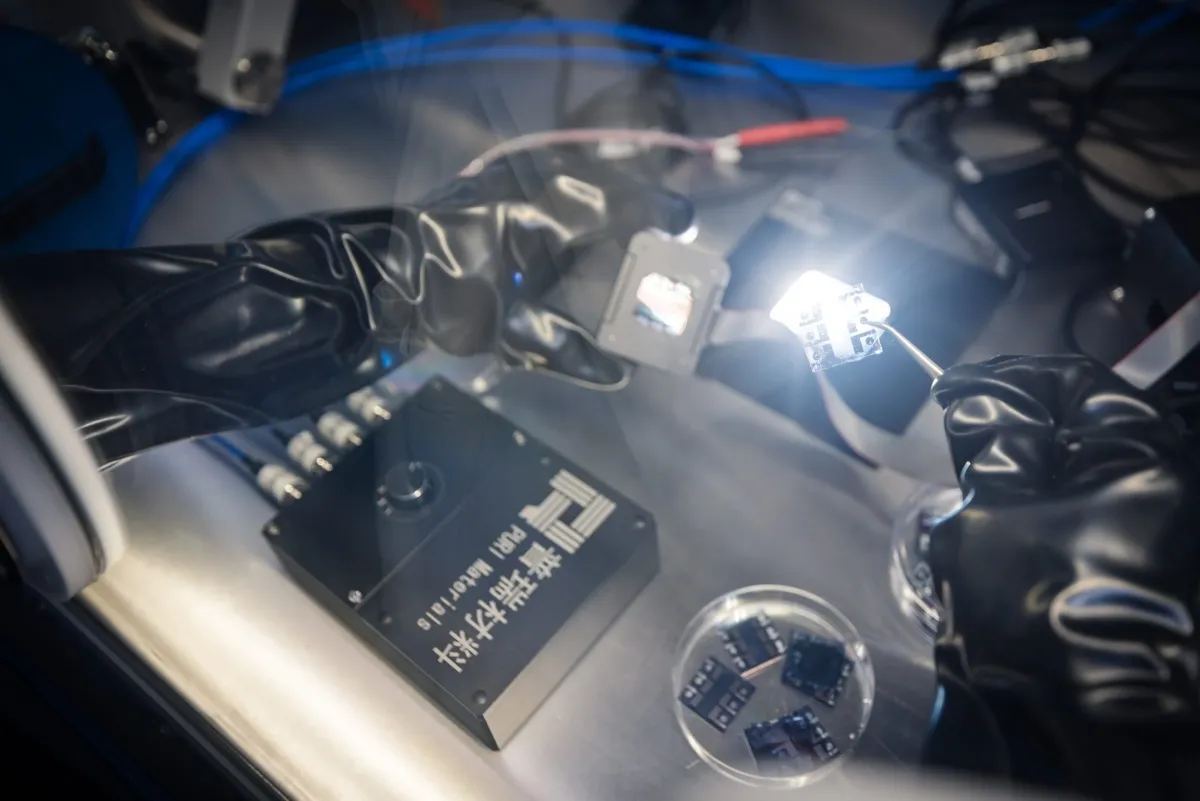
All setups are custom-built by group members and provide optical and electro-optical characterisation of PV devices and photocatalysts.

Time-Resolved Spectroscopy Lab

Key equipment

  • TRPL setup with streak and iCCD cameras, Coherent Chameleon Discovery (660–1320 nm) and Ekspla (210–2100 nm) lasers, and HarmoniXX SHG unit
  • Sensitive EQE and T-dependent sEQE
  • Photoinduced Absorption Spectroscopy (400 nm to 5 µm)
Full lab page Back to overview

Steady-state Spectroscopy Lab

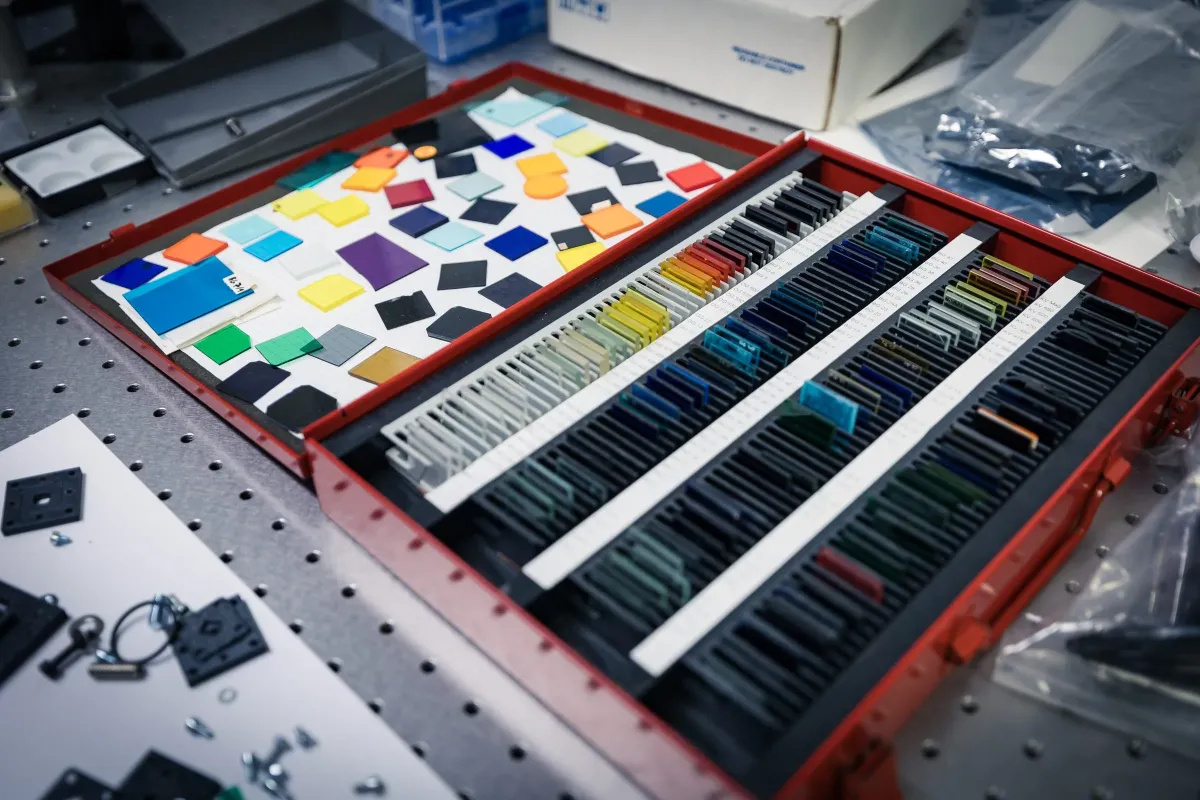
Safe space for students to learn steady-state spectroscopy and photocatalysis techniques.

Steady-state Spectroscopy Lab

Key equipment

  • Photocatalysis reactors coupled with Shimadzu GCMS-QP2020 NX
  • PicoQuant FluoTime 300 – TCSPC system
  • FTIR-RAM Bruker Vertex 70 – RAM II
  • UV/Vis/NIR spectrometer Lambda 1050 (PerkinElmer)
Full lab page Back to overview

X-Ray & Electron Diffraction Labs

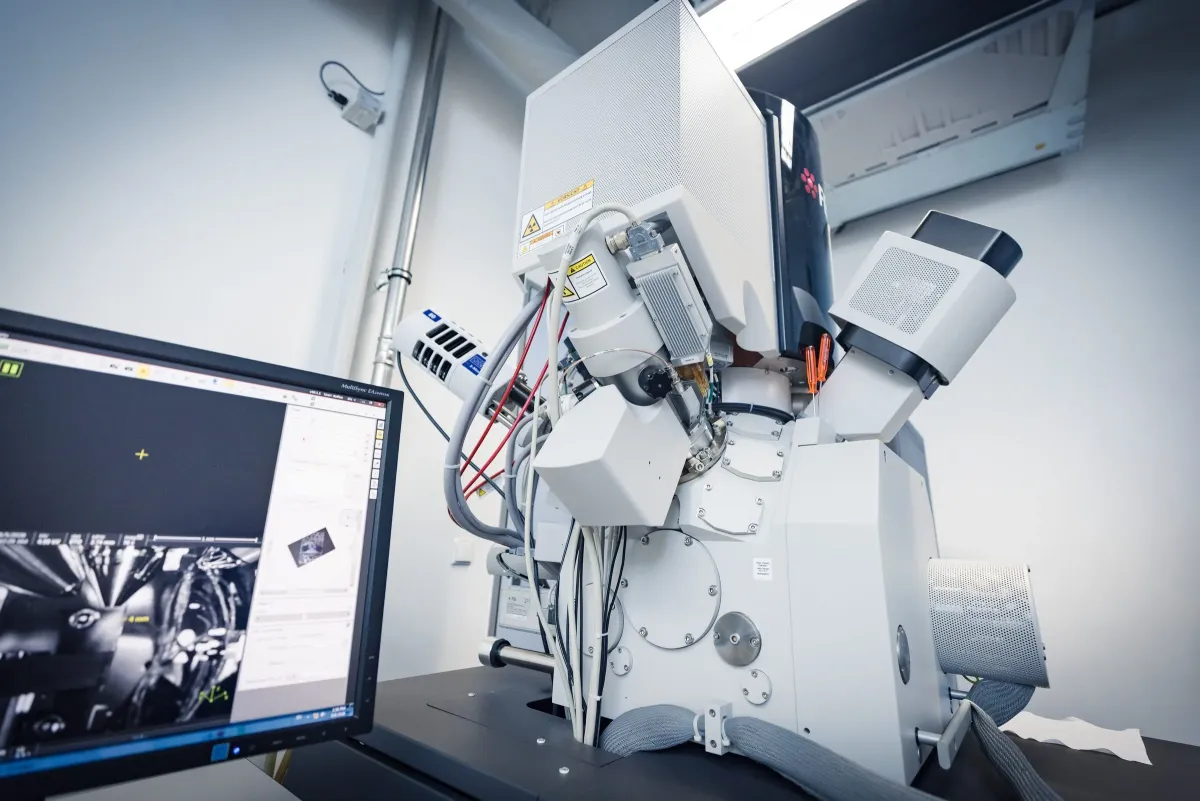
Electron microscopy lab operated by the groups of Prof. Laquai and Prof. Müller-Caspary.

X-Ray & Electron Diffraction Labs

Key equipment

  • Titan Themis 60-300 (FEI): resolution 100 pm in TEM and 80 pm in STEM mode; ultrafast electron detector for event based and time resolved (S)TEM, 4D STEM, Timepix T4 (Quantum Detectors); EDX; tomography, heating, cooling and biasing, vacuum and cryo transfer, and more
  • Helios G3 UC (FEI): landing energy range ~100 eV – 30 keV; resolution 0.6 nm (2 kV – 30 kV); STEM possible (< 30 kV); in-situ Ga-beam preparation; site-specific TEM lamella preparation
  • Tecnai G2 20 S-Twin (FEI): TEM with LaB6 emitter, operated at 200 kV; Tietz CMOS camera (2k); EDAX EDX detector
Full lab page Back to overview